How Much Can You Really Make From One Faceless YouTube Channel?
# How Much Can You Really Make From One Faceless YouTube Channel?
Every faceless YouTube guru will tell you the same story: start a channel, post AI-generated videos, wake up to $10,000 a month. So how much can you really make from one faceless YouTube channel — once you strip out the screenshots, the fake dashboards, and the "results not typical" fine print? The honest answer is that the range is enormous, and almost all of it is decided by two things most beginners ignore: your niche and your patience. This is a reality check built on real, sourced numbers — not invented ones.
Below, we break down actual AdSense RPM ranges by niche, why niche choice can swing your revenue per view by 10x or more, how long it realistically takes to earn meaningful money, and the revenue streams that quietly earn faceless creators more than ads ever do.
## The one number that decides everything: RPM
Before we talk totals, you need one concept: **RPM** (revenue per mille), or how much you actually keep per 1,000 views after YouTube takes its cut. It is not the same as CPM, which is what advertisers pay. Through the YouTube Partner Program, creators keep roughly **55% of gross ad revenue** — YouTube takes about 45%. So your real ad income is (monetized views ÷ 1,000) × RPM.
Here is why this matters so much. Two channels can post the exact same number of videos, get the exact same number of views, and one earns ten times more than the other. The difference is not effort. It is the niche's RPM.
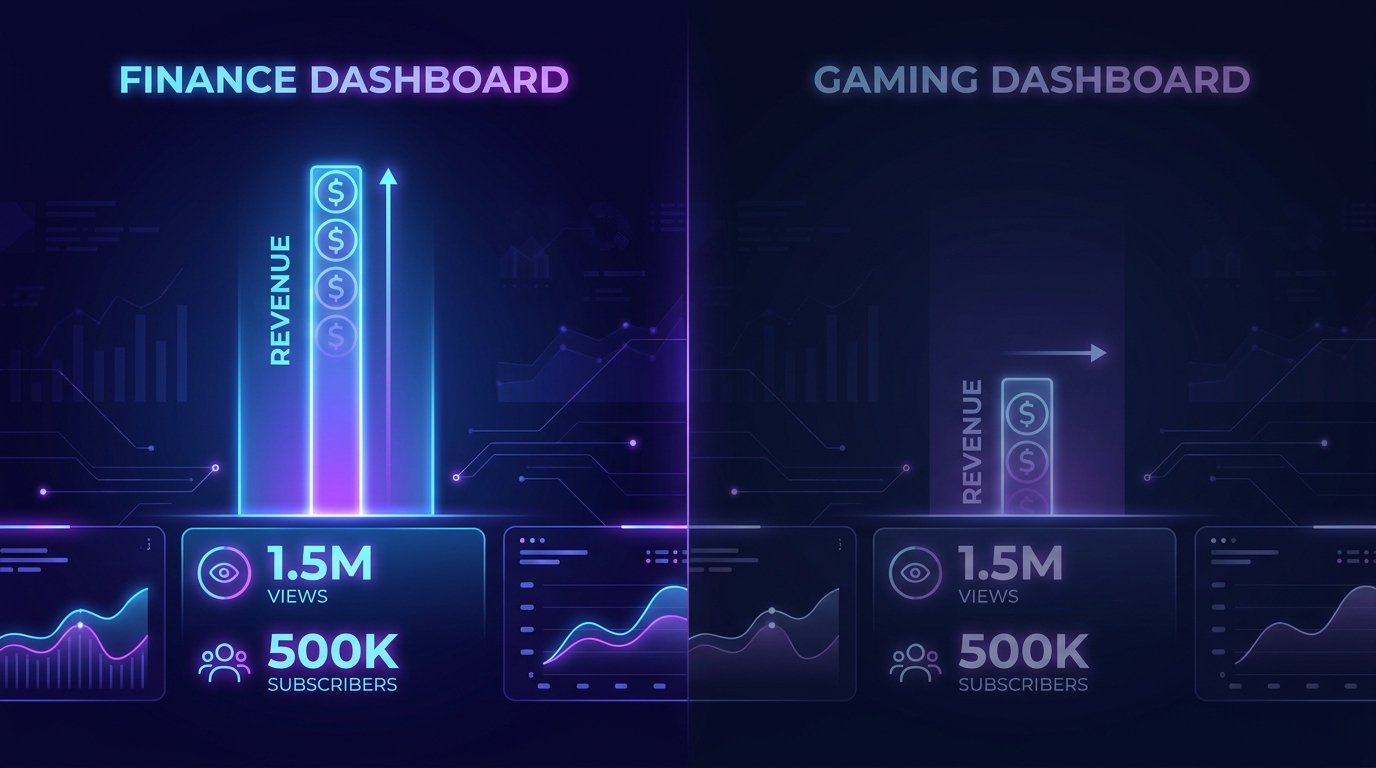
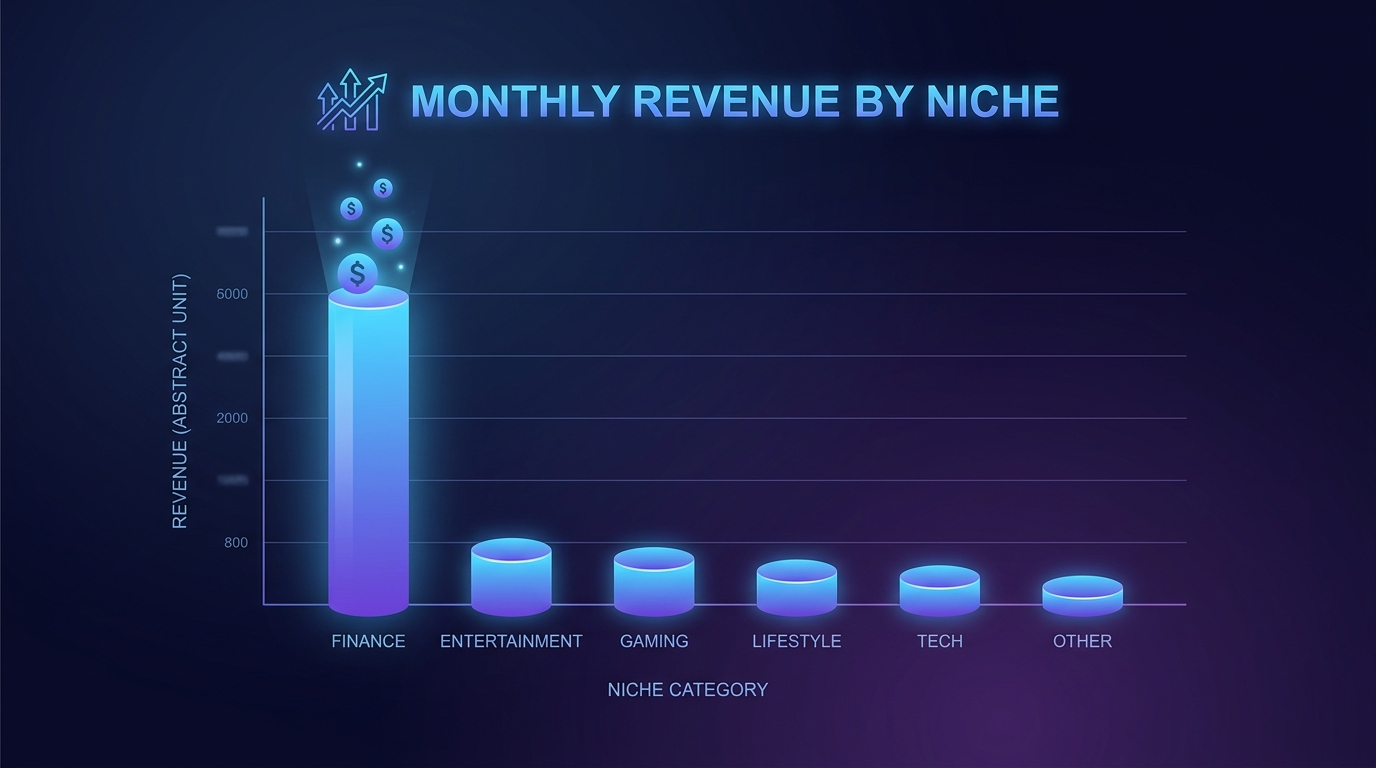
> Personal finance and investing content is the highest-paying category on YouTube, earning roughly 5–10x more than entertainment or gaming channels with identical view counts.
## Faceless YouTube RPM by niche: the real ranges
The single biggest lever on your income is the niche you pick, because RPM tracks how valuable your audience is to advertisers. An older, wealthier US audience researching credit cards is worth an order of magnitude more than a global audience watching relaxing music while they sleep.
Here are real 2026 RPM ranges reported across the faceless-channel and creator-analytics space:
| Niche | Approx. RPM (creator keeps) | Why it pays what it does |
|---|---|---|
| Credit cards / loans | $25–$45 | Advertisers pay huge sums for high-intent US buyers |
| Investing / trading | $18–$35 | Wealthy, action-ready audience |
| Personal finance / budgeting | $10–$22 | Broad but still buyer-heavy |
| B2B software / SaaS reviews | $5–$12 | Fewer viewers, but each is valuable |
| AI tools & tech news | $8–$15 | Advertiser competition is rising fast |
| Health & wellness | $10–$18 | Supplement and program advertisers |
| Entertainment / vlog / reaction | $1–$3 | Cheap, broad, low intent |
| Gaming | $1–$8 | Young audience, lower ad spend |
| Sleep music / ASMR / scary stories | $0.50–$2.50 | Passive viewers, minimal buying intent |
The gap between the top and bottom of that table is the whole game. It is the difference between needing 40,000 views to earn $1,000 and needing 500,000+.
> At a $4 RPM you need about 250,000 monthly views to make $1,000 from ads. At a $25 RPM, you need roughly 40,000.
This is exactly why "just make relaxing music videos, it's easy" is such misleading advice. Those niches can absolutely work — but only at a scale (millions of monthly views) that is far harder to reach than the hype admits. If you want to understand which formats and topics actually earn, our breakdown of [the best niches for short-form and faceless content](/features) is a better starting point than chasing whatever looks easiest to produce.
## So what does one channel actually make?
Let's put the RPM ranges into monthly totals. Reported earnings for established faceless channels (once they are getting meaningful, consistent views) cluster like this:
| Niche category | Typical monthly range at ~500K views | Notes |
|---|---|---|
| Personal finance / investing | $8,000–$25,000 | Ads plus affiliate income |
| Business documentary / case study | $6,000–$18,000 | High retention, high RPM |
| SaaS / business reviews | $5,000–$15,000 | Affiliate-heavy |
| AI tools / tech news | $6,000–$16,000 | Fast-growing advertiser demand |
| Broad entertainment / compilation | $500–$2,500 | Needs far more views to match |
Notice something important: the high numbers already **assume affiliate and other income layered on top of ads**. Pure AdSense alone is usually the smaller slice. We'll come back to that.
And the honest caveat: those are figures for channels that have *already made it*. The median faceless channel earns close to nothing, because most never cross YouTube's monetization threshold or never build enough of a catalog to compound. Treat the table above as the ceiling you're climbing toward, not a starting salary.
## The timeline nobody wants to hear
Here is the part the get-rich-quick crowd skips. Money on YouTube compounds, and compounding takes time.
First you have to reach the YouTube Partner Program threshold to even turn on ads. Then you need enough *monetized* views — not total views, since a share of your traffic won't serve monetizable ads — to matter. For most faceless creators posting consistently, meaningful income (a few thousand dollars a month) is a **6–18 month** project, not a 30-day one. Channels in high-RPM niches can hit real money faster because each view is worth more, but they also compete against smarter, better-funded operators.
The realistic mental model:
- **Months 0–3:** You're learning what your audience actually watches. Expect near-zero revenue. Your job is publishing volume and studying retention.
- **Months 3–9:** If a few videos start outperforming, you lean into that format. This is where most people quit — right before the compounding starts.
- **Months 9–18+:** A back catalog of videos earns while you sleep. New uploads get a head start from an established audience.
The creators who make it are almost never the ones with one lucky video. They're the ones who found a repeatable format and *ran it dozens of times*. That's also where working smart beats working hard: instead of guessing, you can [reverse-engineer the structure of videos that already went viral](/create) in your niche and model your uploads on what's provably working, rather than posting into the void for six months hoping something sticks.

## Revenue beyond ads: where the real money hides
If you only count AdSense, you're seeing a fraction of the picture. Diversified faceless channels typically report **ad revenue as only 30–50% of total income** — the rest comes from streams that pay far more per viewer.
| Revenue stream | How it works | Why it out-earns ads |
|---|---|---|
| Affiliate marketing | Link to tools/products, earn commission | High-RPM niches (software, finance) pay large, recurring commissions |
| Digital products | Sell your own PDF guides, templates, notion kits, courses | You keep nearly 100%; one buyer can outweigh thousands of views |
| Sponsorships | Brands pay a flat fee per video | Priced on audience value, not view count |
| Memberships / community | Recurring fan support | Predictable monthly base |
The math is stark. A $10,000/month AdSense channel that layers in affiliates, a $27 PDF guide, and the occasional sponsorship commonly grows into **$25,000–$40,000/month total**. The ads were never the business — they were the funnel that fed the business.
> Faceless channels that diversify report ad revenue as just 30–50% of total income — a $10K/month AdSense channel often becomes $25K–$40K once the full mix is layered on.
This is the single biggest reversal of the beginner mindset. Don't ask "how do I get more views to earn more ad money?" Ask "how do I turn viewers into buyers of something I own?" A modest channel in a buyer-heavy niche with a solid digital product can out-earn a huge channel that only runs ads.
## Why niche choice beats hustle every time
Put the pieces together and the picture is clear. A faceless finance channel with 100,000 monthly views and a $30 digital guide can plausibly out-earn a faceless entertainment channel with 2 million monthly views. Same platform, radically different economics — driven almost entirely by *who* is watching, not how many.
That's the reality check. Faceless YouTube is a real, viable business. But "faceless" doesn't mean "effortless," and view count is a vanity metric compared to audience value. Choose a niche where the viewers are worth something, commit to a repeatable format, and build at least one thing you own to sell them. If you'd rather validate a format before sinking months into it, tools that analyze proven viral video structure — like [ClipNovia](/pricing) — let you model what's already working instead of gambling on guesswork.

## Frequently asked questions
**How much does a faceless YouTube channel make per 1,000 views?**
It depends entirely on niche. After YouTube's cut, creators keep roughly $0.50–$2.50 per 1,000 views in low-intent niches like sleep music, versus $10–$45 per 1,000 in finance and credit-card content. Same 1,000 views, up to 20–40x the pay.
**How many views do I need to make $1,000 a month?**
At a low $4 RPM, roughly 250,000 monthly views. At a mid $12 RPM, about 84,000. At a high $25 RPM, around 40,000. This is ad income only — products and affiliates lower the views you need dramatically.
**How long until a faceless channel makes real money?**
For most consistent creators, meaningful income is a 6–18 month project, not a 30-day one. You first have to reach monetization, then build enough catalog and audience for revenue to compound. High-RPM niches can get there faster because each view is worth more.
**Is faceless YouTube still worth starting in 2026?**
Yes, but with realistic expectations. Competition and AI-generated content have raised the bar, so a differentiated format and a buyer-heavy niche matter more than ever. The people who profit treat it as a real business with multiple revenue streams, not a passive-income lottery ticket.
**What's the highest-paying faceless niche?**
Finance-adjacent content — credit cards, investing, and personal finance — consistently pays the most, with credit-card content reaching $25–$45 RPM. B2B software, AI tools, and business case studies also pay well because they attract high-value advertisers.
**Do I make more from ads or from products?**
Almost always products and affiliates. Diversified channels report ads as just 30–50% of total income. A single digital product buyer can be worth more than thousands of ad views.
## The honest bottom line
So, how much can you really make from one faceless YouTube channel? Anywhere from nothing to $40,000+ a month — and the outcome is decided long before you upload, by the niche you pick and whether you're willing to build for a year instead of a week. A finance channel with a digital product and modest views can out-earn a massive entertainment channel running ads alone. That's not the get-rich-quick story, but it's the true one, and it's a far more reliable path.
If you're ready to build on evidence instead of hype, start by studying what already works in your niche. [Try ClipNovia](/create) to analyze proven viral video structures and turn viral trends into your own content — so your first six months are spent modeling winners, not guessing in the dark.