Is AI Dubbing Worth It for Faceless Creators in 2026? What the Data Actually Shows
# Is AI Dubbing Worth It for Faceless Creators in 2026? What the Data Actually Shows

You've heard the pitch a dozen times: dub your videos into five languages and watch your views multiply. Here's what actually happens when a faceless creator tries it — the real costs, the realistic upside, and a way to test it before you commit a single dollar to full-catalog translation.
## Why This Question Is Different for Faceless Channels
Every "should you dub your content" article on the internet is written for creators with a face, a personality, and a parasocial relationship with their audience. That calculus doesn't apply to faceless channels.
If your channel is built on stock footage, AI narration, text overlays, or an avatar, the thing you're actually translating is narration and captions — not a performance. That's a much lower bar for AI voice cloning translation to clear convincingly, because there's no lip-sync mismatch to explain away and no personal brand voice that viewers already know intimately. A slightly-off dub on a faceless explainer is far less jarring than a slightly-off dub on a vlogger's face.
That's the good news. The bad news is that faceless channels usually run on thinner per-video margins — you're often optimizing for volume, not per-video watch time from a loyal fanbase — so the dubbing spend has to earn its keep across many videos, not one hero piece.
> A slightly-off AI dub on a faceless explainer is far less jarring than the same mismatch on a creator's own face — which is exactly why faceless content is a better candidate for AI dubbing than personality-driven content is.
## What AI Dubbing Actually Costs in 2026
The price of AI video dubbing for YouTube Shorts and TikTok has dropped enough that it's no longer a niche enterprise expense — but the tools aren't identical, and the difference between "audio-only" and "lip-synced" dubbing matters a lot for short-form content where faces (even stylized or avatar ones) are often on screen.
Across the major platforms, entry-tier pricing in 2026 breaks down roughly like this:
| Approach | Typical cost per minute | Lip sync included? | Best fit |
|---|---|---|---|
| Audio-only AI dubbing (e.g. ElevenLabs Creator tier) | ~$0.55–0.60/min | No | Voiceover-only faceless content, podcast clips, narration |
| Lip-synced AI dubbing (e.g. HeyGen entry tier) | ~$0.10–0.25/min effective (credit-based) | Yes | Avatar-based or talking-head faceless formats |
| Budget/API dubbing tools | ~$0.10–0.30/min | Varies | High-volume testing, batch processing |
| Professional human dubbing | Tens of dollars per finished minute | Yes | High-stakes flagship content only |
Even at the higher end, AI dubbing is roughly one to two orders of magnitude cheaper than human dubbing. For a 60-second short, you're typically looking at well under a dollar in raw generation cost per language on audio-only tools, and still a fraction of human-dubbing rates even with lip sync included. That's the entire reason this question is worth asking now — five years ago the math didn't work for anyone but well-funded studios.
## What the Platforms Actually Reward
This is where a lot of "just dub everything" advice falls apart — it treats TikTok, YouTube Shorts, and Instagram Reels as interchangeable, and they aren't.
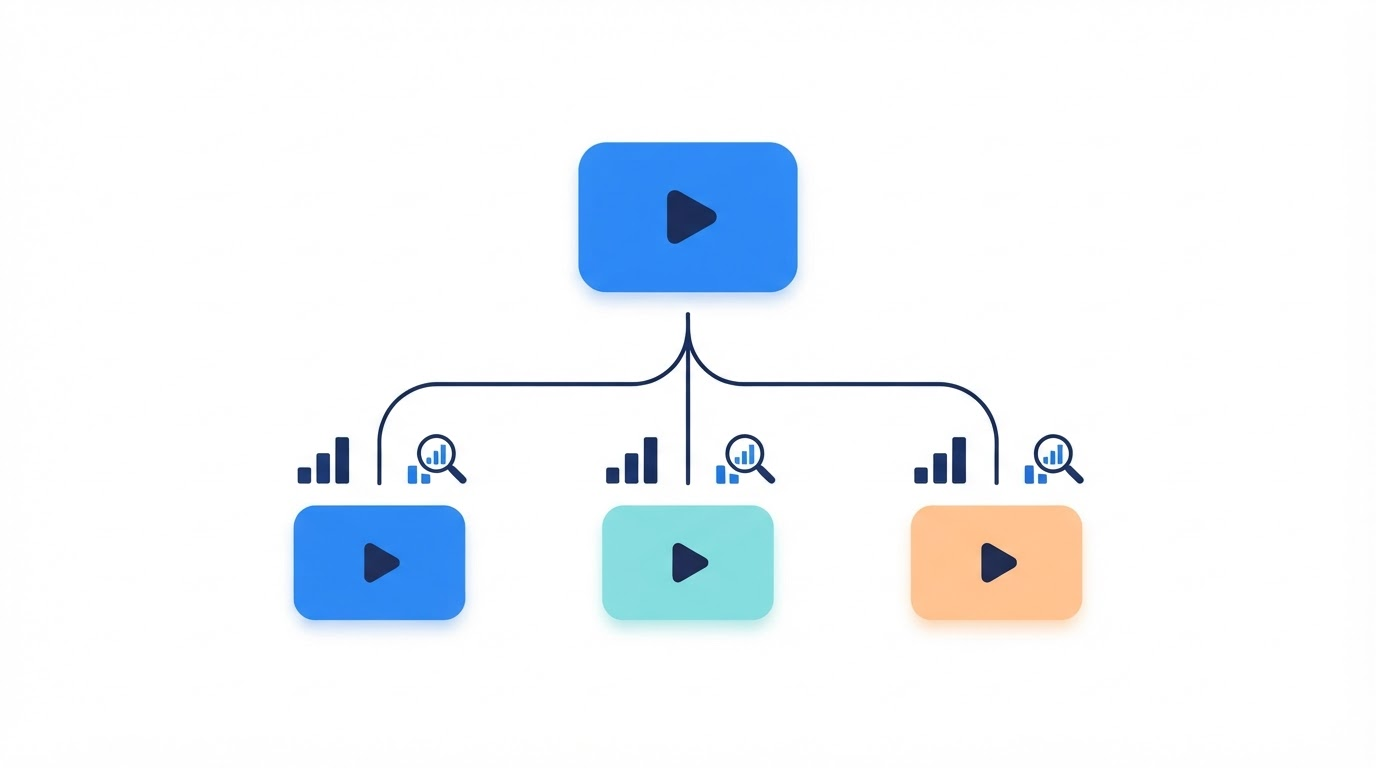
**YouTube** has the most mature system. Its multi-language audio track feature lets you attach multiple dubbed audio tracks to a single upload, and the platform auto-serves the track matching a viewer's language settings. This isn't a hypothetical: creators who add multi-language audio tracks see over 25% of their watch time come from viewers in a non-primary language, and the feature — after a two-year pilot — is now rolling out to all creators, with testing extending into Shorts specifically. Mark Rober's channel reportedly dubs into 30+ languages per video at this point. That's the strongest, most direct evidence that dub tiktok videos into other languages-style efforts pay off — but it's evidence from a platform with a purpose-built distribution mechanism for it.
**TikTok** works differently. There's no equivalent "audio track switcher" — a dubbed video is a separate upload, and the algorithm's multilingual signal comes from matching caption language, spoken language, hashtags, and a viewer's content-language preferences. The upside is real (TikTok's system explicitly rewards consistent multilingual signals rather than penalizing multiple languages), but it means every dubbed version is its own post competing for its own watch-time signal, not a bonus layer on an existing hit.
**Instagram Reels** sits in between — auto-translated captions are common, but native audio dubbing distribution is less structurally rewarded than on YouTube.
The practical takeaway: if most of your distribution is YouTube Shorts, dubbing is closer to a "flip a switch on your best performers" decision. If it's TikTok, it's closer to "produce and test a genuinely separate asset" — which changes the ROI math considerably.
## The Realistic Payoff — and Where It Breaks Down
The honest answer to "is AI dubbing worth it" is: it depends entirely on whether your niche has a large non-English audience that your current content isn't reaching, and whether your format survives translation.
Multilingual short-form content tends to pay off fastest for:
- **Broadly legible niches** — facts, life hacks, history, true crime, animal content, motivational content — where the value doesn't depend on wordplay, regional humor, or culturally specific references.
- **Channels already seeing organic non-native-language traffic** — check your YouTube Analytics geography and language breakdown before you dub anything; if 15-20% of your views already come from Spanish- or Portuguese-speaking regions despite English-only audio, that's a signal, not a guess.
- **High-volume faceless formats** — because the per-video dubbing cost is now low enough that it scales with your existing production pipeline instead of requiring a separate budget line.
It breaks down for:
- **Wordplay- or meme-dependent scripts**, where translation flattens the hook.
- **Extremely saturated English-language niches** where you don't have clear evidence of an underserved non-English audience — dubbing a video nobody outside your existing audience wants doesn't create new demand.
- **One-off viral spikes** — dubbing a single breakout video after the fact rarely recaptures its moment; the algorithm's window has usually passed by the time translated versions go up.
> Even at the higher end of 2026 pricing, AI dubbing costs a fraction of what human dubbing has always cost — the real bottleneck isn't the tool anymore, it's whether your niche and format actually have a non-English audience waiting.
## How to Test It Before You Commit
Don't dub your back catalog on a hunch. Run a controlled test first:
1. **Check your existing geography data.** Pull the country and language breakdown from YouTube Analytics (or TikTok's audience tab) for your last 20-30 videos. Look for markets where you're already getting meaningful views despite English-only audio — that's your dubbing target list, not a guess based on global population.
2. **Pick 5-8 of your best-performing videos, not your average ones.** Dubbing a video that already proved it works is a much cleaner signal than dubbing something unproven.
3. **Dub into 2 languages, not eight.** Spread across too many languages and you can't tell which one is driving results. Match the languages to what your geography data actually showed.
4. **Use audio-only dubbing first if your format allows it.** It's cheaper, faster to iterate on, and for narration-driven faceless content the lip-sync gap barely matters — save the lip-synced tier for avatar or talking-head formats where mismatched mouth movement is genuinely distracting.
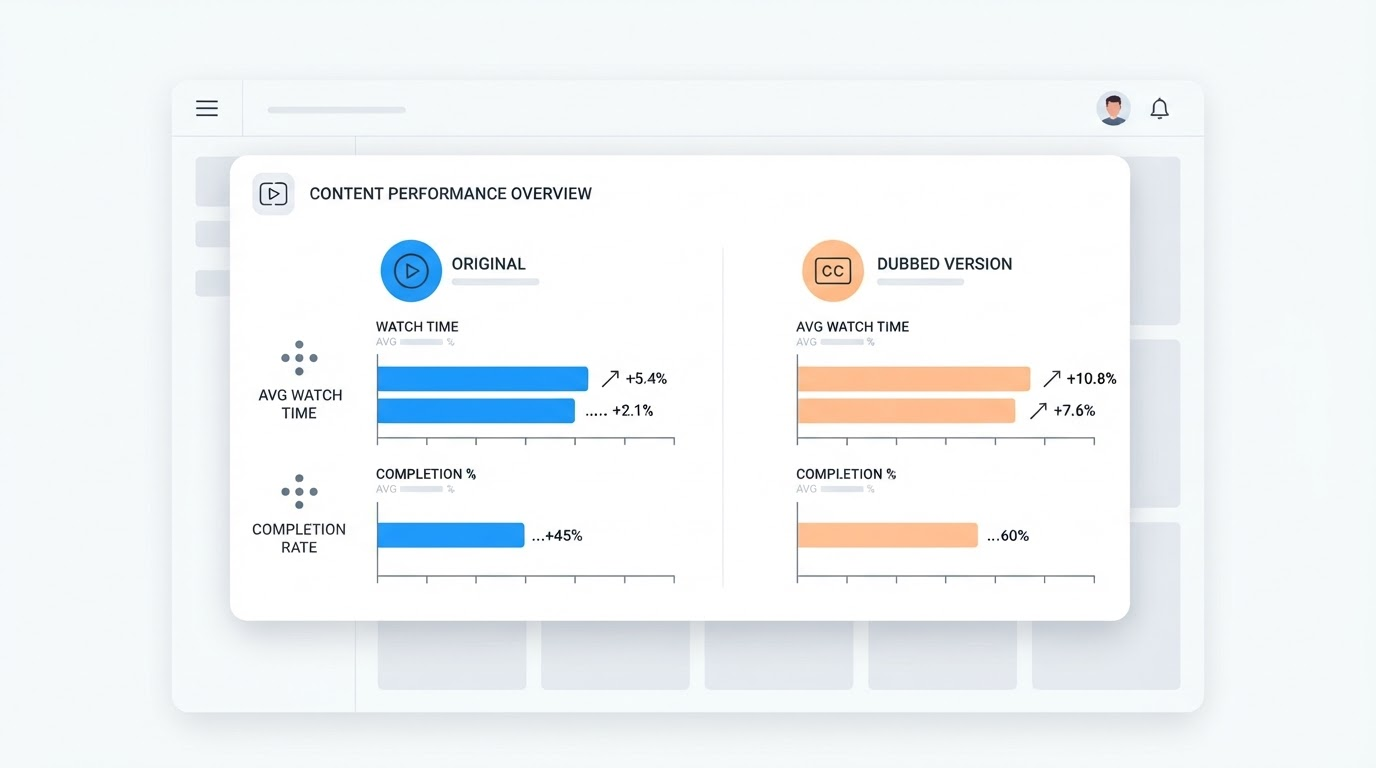
5. **Give it a real sample size before judging.** One dubbed video with 400 views tells you nothing. Look at watch-time share and completion rate from the target-language audience specifically, the same metric YouTube surfaces for multi-language audio tracks.
6. **Compare cost-per-view-earned, not just view count.** A dubbed video that adds 20% more views but cost 40% more to produce isn't automatically a win — run the actual unit economics before scaling it across your catalog.
This is the same "test cheap before you commit" framing that makes sense when picking any AI tool for a faceless channel: don't buy into a workflow because a case study impressed you, buy in because your own data showed a lift.
## Where ClipNovia Fits Into This Decision
None of this testing works if you're guessing at which videos to dub or which regions are worth targeting. Before you spend anything on multilingual short-form content, it's worth analyzing which of your existing videos are actually resonating and why — pacing, hook structure, topic — so you're dubbing content that's proven to work rather than hoping translation fixes a video that underperformed for unrelated reasons. Tools built for analyzing viral short-form patterns can show you which formats travel well across audiences before you spend a cent on localization, which is a cheaper filter than running the dubbing test itself on the wrong videos.
## Bottom Line
AI dubbing in 2026 is cheap enough that the cost is rarely the real objection anymore — a dubbed short can cost well under a dollar in raw generation fees. The actual question is whether your niche has a non-English audience your current content isn't reaching, and whether your format survives translation without losing what made it work. Check your geography data first, test on proven winners with two languages before eight, and measure watch-time share the way YouTube's own multi-language audio data suggests you should — not total view count. Do that, and AI dubbing stops being a trend to chase and becomes a distribution channel with a real, testable ROI.