TikTok's 2026 Algorithm Update: What Actually Changed and How to Adapt Your Strategy

# TikTok's 2026 Algorithm Update: What Actually Changed and How to Adapt Your Strategy
If your reach cratered this year even though your content didn't get worse, you're not imagining it — TikTok quietly rewired how it decides what gets pushed, and creators who don't adjust are getting buried by ones who do.
## The Completion Rate Bar Just Got Higher
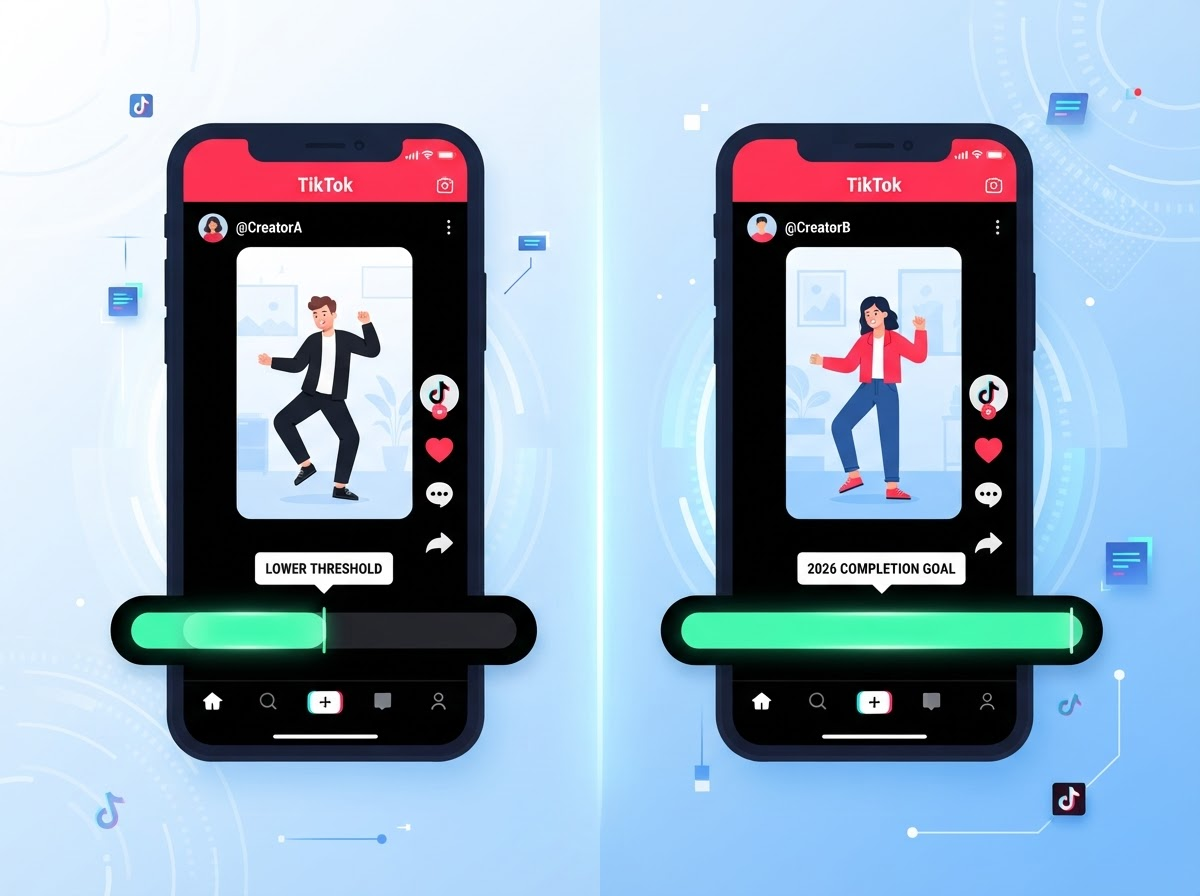
The single biggest shift in TikTok's 2026 algorithm is a hard change to how much of your video someone needs to watch before the platform trusts it enough to expand distribution. For years, the informal benchmark sat around 50% completion. That threshold has moved to roughly 70%. On a 60-second video, that's the difference between the algorithm being satisfied with 30 seconds of watch time and now expecting closer to 42 seconds — before your clip even leaves its initial test batch.
This is why the "hook hard in the first 3 seconds, then coast" playbook is losing effectiveness. Completion rate and watch time are now estimated to carry something like 40-50% of the total ranking weight, well ahead of shares, comments, or follower count, none of which function as a direct ranking input anymore. TikTok isn't just asking "did they watch the beginning" — it's asking "did they watch the whole thing."
> The 70% completion rate threshold introduced in 2026 represents a meaningful raise of the bar from the previous ~50% benchmark.
**What this means practically:** front-loading a hook and then dropping off in quality no longer earns a pass. The video has to hold attention continuously — through the middle, not just the open. That favors creators who build a full narrative or payoff arc over ones stacking disconnected fast cuts to disguise thin content.
## Niche Consistency Is No Longer Optional
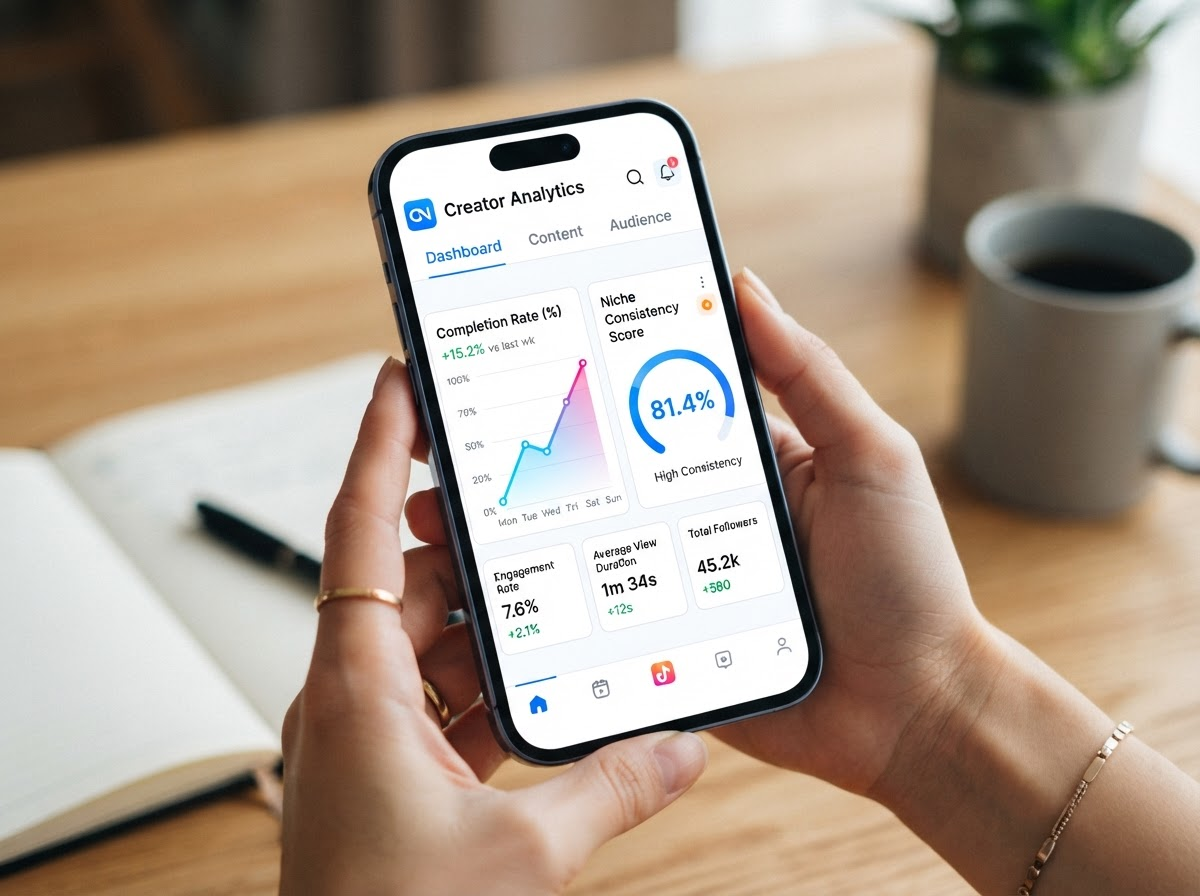
The second major shift punishes topic-hopping. According to a widely circulated algorithm analysis, accounts that post across three or more unrelated topics are seeing roughly a 45% reach penalty compared to accounts that stay within a clear lane. TikTok's ranking system works by building a topical profile of each account — essentially, "what is this creator about" — and it uses that profile to decide which interest clusters to test your content against. When your posting history is scattered, the system can't confidently slot you anywhere, so it hedges by showing you to fewer people.
The creators seeing the fastest growth in 2026 are keeping roughly 80% of their output inside one core niche and reserving the remaining 20% for closely adjacent themes, not unrelated detours. This is the tiktok algorithm 2026 reality that trips up a lot of accounts that built their following pre-2026 by jumping on whatever trend was hot that week — that strategy actively works against you now.
> Accounts posting across 3+ unrelated topics see roughly 45% lower reach than those who stay focused on a single niche.
If you're using ClipNovia (or any AI-assisted workflow) to analyze viral videos and adapt formats, the niche-consistency rule is a reason to be selective about which viral formats you borrow — pulling a format from a completely different niche and running with it can quietly work against your account's topical profile even if the individual clip performs.
## Tiktok Completion Rate and Watch Time Ranking Signal, Explained
It's worth separating two terms creators often conflate: completion rate and watch time. Completion rate is the percentage of viewers who reach the end of your video. Watch time (or average view duration) is the raw time spent watching, aggregated across everyone who saw it. TikTok in 2026 weighs both, but they reward different things:
| Signal | What it measures | What it rewards |
|---|---|---|
| Completion rate | % of viewers who finish the video | Tight editing, no dead weight, satisfying endings |
| Watch time (avg. duration) | Total seconds watched, aggregated | Longer-form content (60s–3min) that sustains interest |
| Rewatch/loop rate | How often viewers watch again | Loopable structure, information-dense clips |
| Shares & meaningful comments | Active engagement beyond viewing | Content worth sending to someone or discussing |
| First-60-minute engagement | Early velocity right after posting | Immediate relevance to your existing audience |
Note the middle row: TikTok is now favoring videos in the 60-second-to-3-minute range that hold attention throughout, over the 5-8 second loop-bait clips that dominated a couple of years ago. That's a real strategic shift — it rewards creators willing to build a complete idea instead of a fragment.
## The First 60 Minutes Decide Almost Everything Else
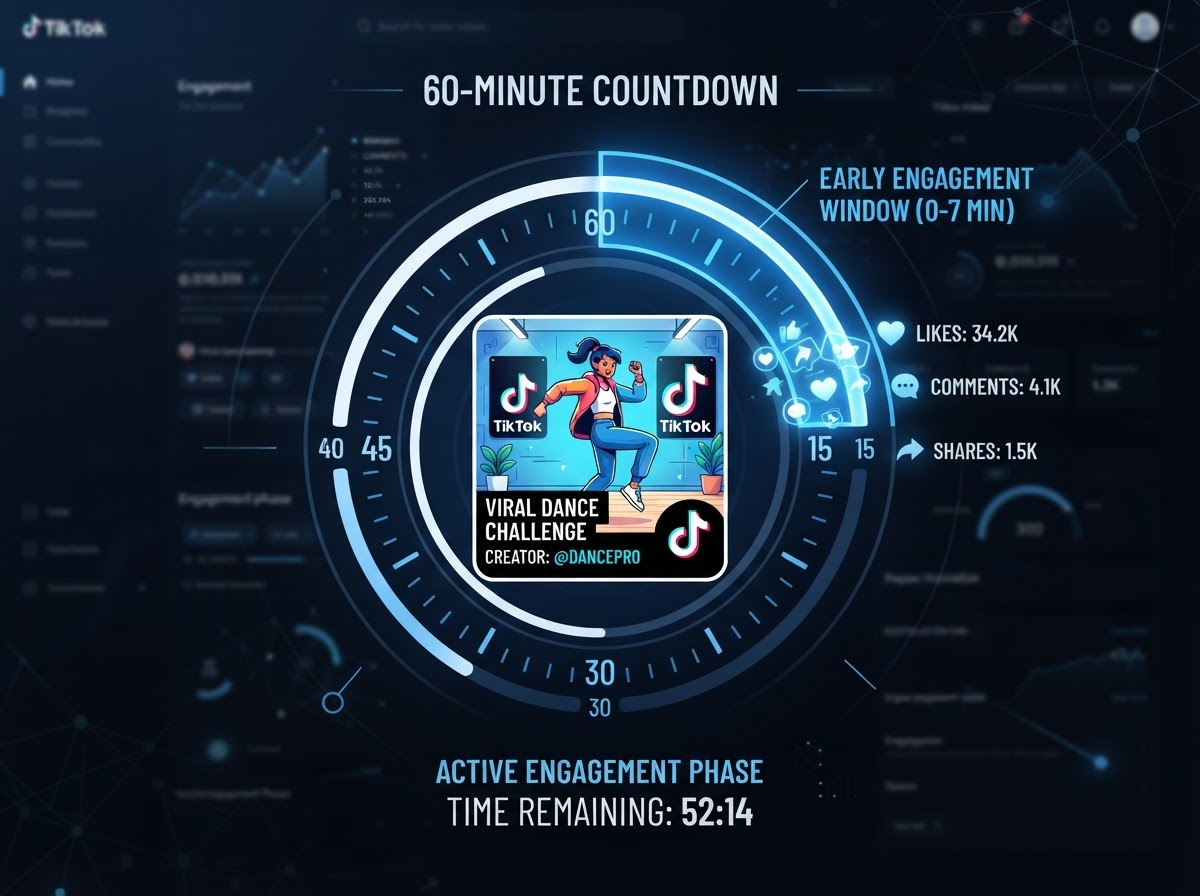
TikTok has also increased how heavily it weighs engagement in the hour immediately after you post. The platform tests every video against a small initial audience, and how that group responds — completion, likes, comments, shares — determines whether it gets pushed to the next, larger batch. In 2026, that first-hour window matters more than it used to, because early engagement velocity is the trigger for the next round of distribution.
Practically, this rewards creators who post when their actual audience is online (not just a generic "best time to post" slot) and who prime their community to engage quickly — a pinned comment, a community post, or simply consistent scheduling that trains your followers to check in.
## Where AI-Assisted Content Actually Stands
There's real nuance here that's worth being honest about instead of glossing over. Some analyses this year claim TikTok's 2026 algorithm favors authentic human creators over AI-generated video outright. Others point out that AI-generated content still goes viral regularly, because the ranking system is evaluating completion rate and engagement — not the tool that produced the clip. Both are partly true: TikTok has gotten better at flagging low-effort, templated AI output (stitched stock clips, generic voiceover, no real hook), but it isn't penalizing "AI-assisted" as a category.
The practical takeaway for creators using AI tools like ClipNovia to analyze viral videos and generate new content: the algorithm doesn't care how you made the video, it cares whether people watch it to the end. That means:
- Use AI to shortcut research and drafting (reverse-engineering what already works, generating first-draft scripts) rather than to skip the editing pass entirely.
- Keep a human hand on pacing, hook wording, and the payoff — the parts that actually move completion rate.
- Avoid generic AI narration or stock-footage montages with no distinct point of view; that's the specific pattern getting deprioritized, not AI use in general.
> TikTok's algorithm evaluates content quality and engagement, not creation method — but low-effort, templated AI output is increasingly caught by signal-quality detectors.
## How to Adapt Your Strategy Starting Now
Pulling the changes together, here's what to actually change about your posting habits:
1. **Cut for the whole runtime, not just the hook.** Watch your own video back and ask where a viewer would realistically drop off after second 15 — then fix that section, not just the opener.
2. **Pick one niche and stay in it for at least 80% of your posts.** If you cover multiple interests, split them across separate accounts rather than one generalist feed.
3. **Post when your existing audience is actually online**, and treat the first hour after publishing as active — respond to early comments immediately rather than letting the post sit.
4. **Favor one strong 60-90 second video over several rushed 15-second ones.** Quality-over-volume isn't just a platitude anymore; it's a direct reflection of how the ranking system spends its attention.
5. **If you use AI tools in your workflow, use them to sharpen the idea, not to mass-produce filler.** The gap between "AI-assisted" and "AI-generic" is exactly what the algorithm is now able to tell apart.
None of this means the old fundamentals — a strong hook, a clear payoff, a reason to share — stopped mattering. It means the algorithm is now checking whether you deliver on that hook for the full video, whether your account has a coherent identity, and whether your audience reacts fast. Creators who adjust to those three things will find the 2026 update isn't a wall — it's a filter that rewards exactly the kind of focused, retention-first content that was always the harder, more sustainable way to grow.