Why Your AI-Recreated Viral Video Isn't Performing Like the Original (And What Actually Matters)
# Why Your AI-Recreated Viral Video Isn't Performing Like the Original (And What Actually Matters)
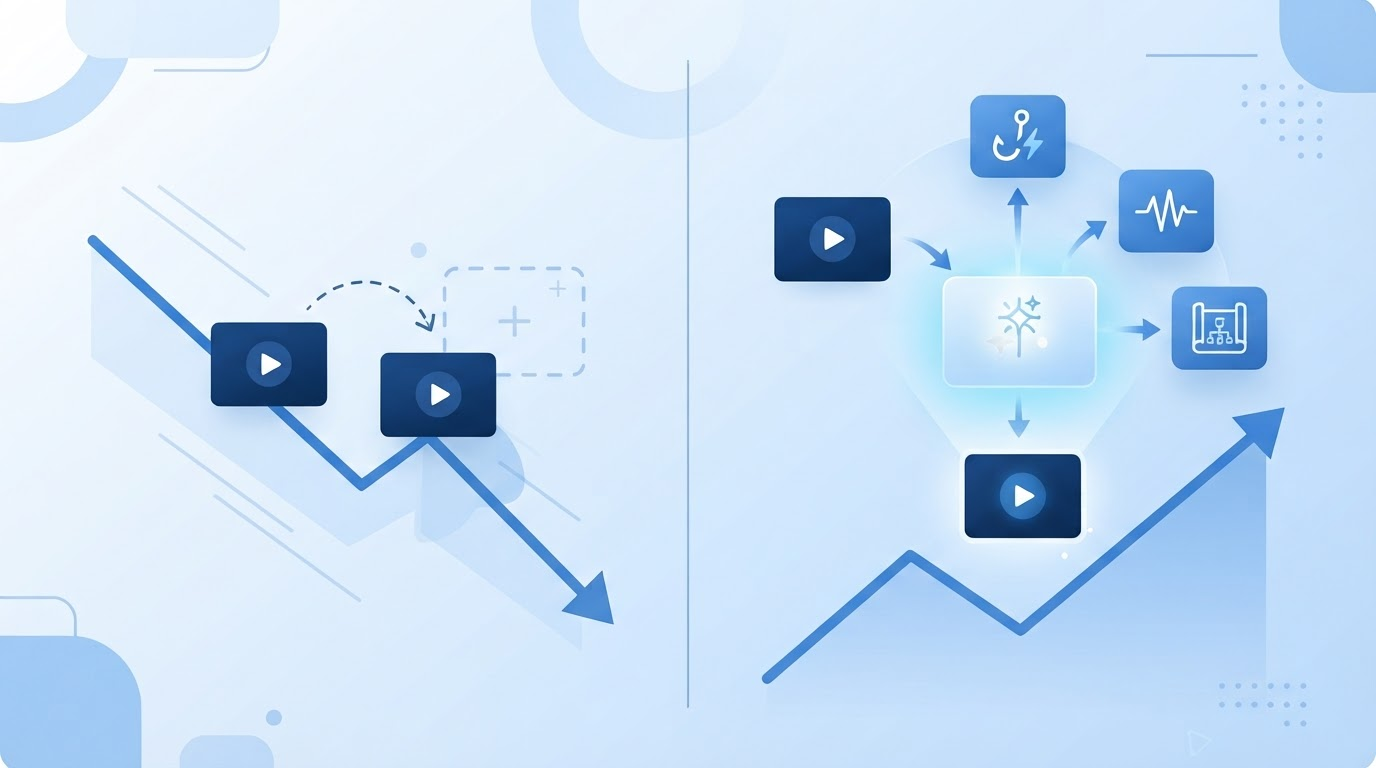
Short answer: your recreation probably copied the wrong layer. Most AI video recreation tools — and most creators doing it manually — clone the *surface* of a viral video: the footage style, the trending audio, the filter, the general vibe. But none of that is what made the original perform. The original worked because of its **structure**: how fast the hook landed, how the cuts were paced, where the payoff sat in the timeline, and what kept people watching past the first three seconds. Copy the surface without the structure, and you've made a video that *looks* similar but tests completely differently with the algorithm and the audience.
This is the single most common reason a recreated video underperforms, and it's fixable once you know what to actually look for before you hit generate.
## Surface Copy vs. Structural Copy — The Difference That Actually Matters
Every viral video has two layers you could copy. Most recreation attempts only touch one of them.
**Surface elements** are what you notice first: the footage, the color grade, the trending sound, the on-screen text style, the general topic. They're easy to spot and easy to imitate, which is exactly why most "recreate this video" tools stop there.
**Structural elements** are what you don't consciously notice but respond to anyway: the exact second the hook resolves, the rhythm of the cuts, how many "beats" the video has before the payoff, and where the retention-holding reveal sits in the timeline. This is the actual mechanism driving watch time — and watch time, not visual similarity, is what platforms use to decide whether to keep pushing a video to new viewers.
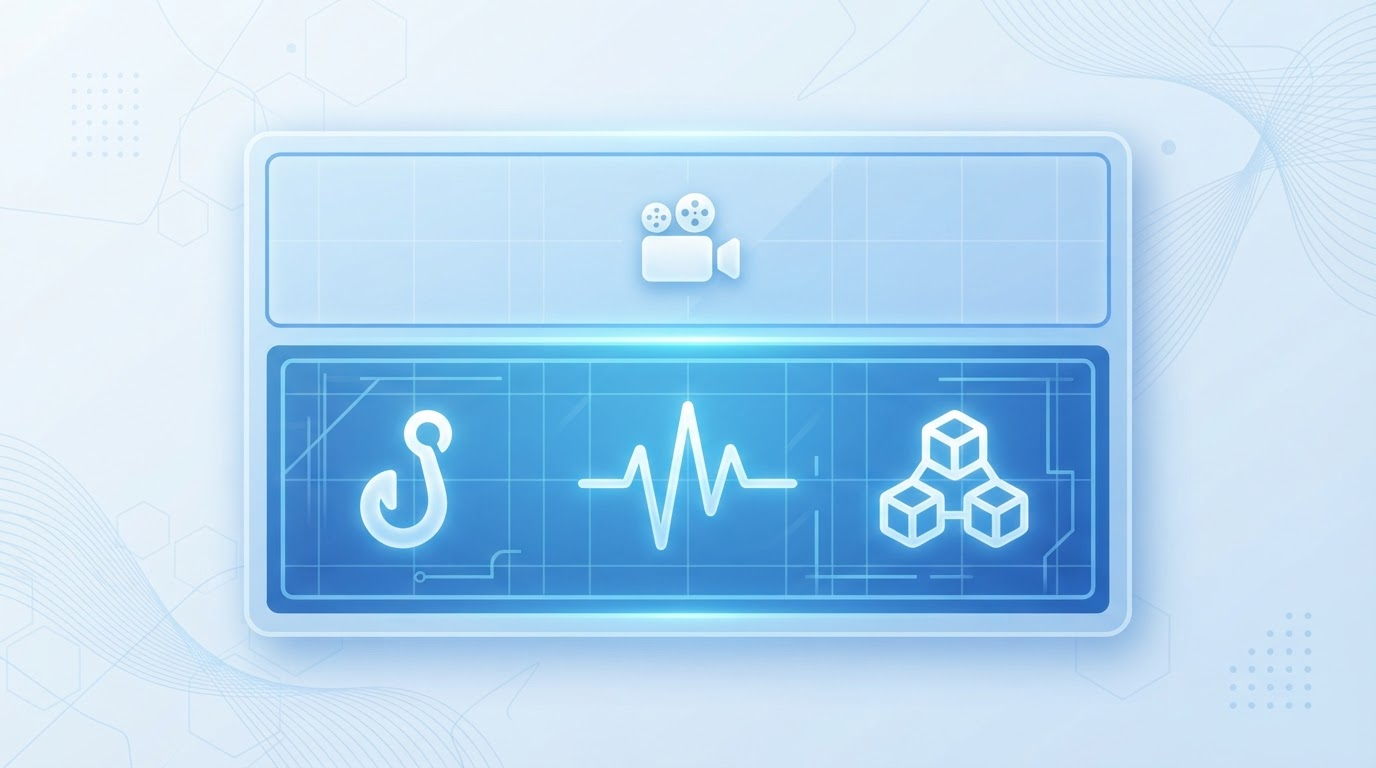
| Surface element (easy to copy, doesn't transfer performance) | Structural element (harder to spot, actually drives performance) |
|---|---|
| Footage, filming style, filter/color grade | Timing of the hook — when the "why should I care" lands |
| Trending audio or sound effect | Pacing rhythm — how often the cut/scene changes |
| On-screen text style or font | Number and order of "beats" before the payoff |
| General topic or niche | Exact placement of the reveal or punchline |
| Overall "vibe" or aesthetic | What happens in the first one to three seconds specifically |
If your recreation nails the left column and ignores the right one, you've made a video that resembles the original without inheriting the mechanism that made it work.
## You're Also Fighting a Fresh Algorithm Test — Not the Original's Momentum
There's a second reason recreations underperform that has nothing to do with your content: every video gets tested independently. Several 2026 creator-tool analyses of the YouTube Shorts and TikTok distribution systems describe a short early-evaluation window — commonly framed as roughly the first 30 to 60 minutes — where the platform shows your video to a small sample audience and watches how many people keep watching versus swipe away almost immediately. If that early sample doesn't hold attention, distribution narrows before the rest of your video ever gets evaluated.
That means the original video's success (its follower base, its early social proof, the algorithmic momentum it built) doesn't transfer to your recreation. Your version is judged entirely on its own first few seconds, on a fresh audience, with zero borrowed authority. If your hook is even slightly slower to land than the original's, you're not losing a little performance — you're likely failing the early test outright, which is why recreations can sometimes get dramatically fewer views rather than just moderately fewer.
This is also why matching the *timing* of the original hook matters so much more than matching its *content*. The platform doesn't know or care that your video is "inspired by" a viral one — it only measures whether people kept watching yours.
## What to Actually Copy When You Recreate a Viral Video
Use this as a working checklist before you generate anything:
1. **Copy the hook mechanic and its timing** — not the words, the *type* of hook (pattern interrupt, question, visual surprise, stakes-first) and roughly when it resolves.
2. **Copy the pacing rhythm** — how often the scene, angle, or on-screen element changes. Count the cuts in the first 10 seconds of the original and match that density, not the footage.
3. **Copy the structural beat order** — setup, escalation, payoff, and how many distinct "moments" happen before the reveal.
4. **Copy the payoff placement** — the specific point in the timeline where the video delivers on what the hook promised.
5. **Don't copy the literal footage, dialogue, or audio.** That's where you cross from structural inspiration into actual copying — see [is it legal to recreate a viral video with AI](/blog/is-it-legal-to-recreate-a-viral-video-with-ai) for where that line sits.
6. **Don't copy the niche or topic if it doesn't fit your channel.** The structure transfers across niches; the subject matter doesn't need to.
If you want a deeper framework for pulling these elements out of a reference video systematically, [how to reverse engineer viral videos](/blog/how-to-reverse-engineer-viral-videos) walks through the breakdown process step by step, and [viral hook formulas for short-form video](/blog/viral-hook-formulas-for-short-form-video) covers the specific hook types worth matching.
## A Quick Example of the Difference
Say the original video hooks viewers with a one-second pattern interrupt (an unexpected sound or visual break), holds a tight three-beat structure — setup, escalation, payoff — and lands its payoff around the nine-second mark. A surface-level recreation might reuse a similar visual style and trending audio but stretch the setup to five seconds because the new topic "needs more context." That single change moves the payoff outside the window most viewers stick around for, and the recreation tests worse even though it looks like a faithful copy.
A structural recreation keeps the one-second interrupt, keeps the three-beat shape, and keeps the payoff at roughly the same relative point in the timeline — just with entirely different footage and subject matter. That's the version that has a real shot at repeating the original's watch-time pattern, because it's copying the mechanism instead of the wrapper.
## How to Actually Analyze a Reference Video Before You Recreate It
The hard part isn't knowing that structure matters — it's extracting it accurately from a video you didn't make. Watching something five times and eyeballing the cut rhythm gets you a rough guess at best.

This is the actual gap ClipNovia is built to close. Paste a reference video into ClipNovia and it analyzes the frames and transcript directly — reporting the hook mechanic and how long it takes to resolve, the structural blueprint (setup, escalation, payoff), the cut rhythm, and the specific retention devices used — instead of leaving you to guess from a rewatch. From there you can generate a new video concept built on those same structural patterns, in your own niche, with your own footage, rather than a surface-level copy of someone else's.
If you're working across several videos in a niche rather than just one, ClipNovia's pattern comparison also splits analyzed videos by performance so you can see which structural choices actually correlate with higher view counts in that niche, instead of assuming every viral video in the space works the same way.
## Frequently Asked Questions
**Is it legal to recreate the structure of a viral video with AI?**
Generally yes — copyright protects the specific expression (the exact footage, dialogue, and audio) of a video, not its format, pacing, or structure. See [is it legal to recreate a viral video with AI](/blog/is-it-legal-to-recreate-a-viral-video-with-ai) for the full breakdown of where the legal line actually sits.
**Do I need to recreate a video in the same niche as the original?**
No. The structural elements — hook timing, pacing rhythm, beat order, payoff placement — transfer across niches. A three-beat structure that works for a cooking video can work for a finance or productivity video; the topic is interchangeable, the mechanism isn't.
**How do I find the hook type that's actually driving a video's performance?**
Start by identifying which category of hook it uses — a pattern interrupt, a stakes-first statement, a visual surprise, or a direct question — and then time exactly when it resolves. [Viral hook formulas for short-form video](/blog/viral-hook-formulas-for-short-form-video) breaks down the common categories in detail.
## The Bottom Line
A recreated video underperforms when it copies what's visible and skips what's structural. Match the footage and the vibe, and you've made a lookalike. Match the hook timing, the pacing rhythm, and the payoff placement, and you've made something with a genuine shot at repeating the original's performance — in your own voice, with your own content. Paste a reference video into ClipNovia to analyze its hook, pacing, and structure before you recreate it, so you're building from what actually worked instead of what was just on screen.
Structure isn't only about recreating one video well — the same structural elements can also wear out from repetition across many videos over time. See [how many times you can reuse a viral video format before it stops working](/blog/how-many-times-reuse-viral-video-format) for the signs a format is losing its effectiveness before you reuse it again.
That single-video mechanism check is different from the question of whether a pattern holds across a whole niche. See [how many viral videos you actually need to analyze before you trust the pattern](/blog/how-many-viral-videos-analyze-to-find-a-pattern) for how many videos it actually takes before a structural pattern is worth trusting.
Sometimes the gap isn't surface-versus-structure at all -- it's that the format was never calibrated for your niche to begin with. See [why a viral format works in one niche and flops in another](/blog/why-viral-video-format-works-in-one-niche-not-another) for the pacing and context checks to run before you recreate anything.
**Related:** If your recreation is already performing on views but your follower count isn't moving, that's a related but separate problem -- see [why AI-recreated viral videos get views but not followers](/blog/why-ai-recreated-viral-videos-views-not-followers) for the structure-versus-identity breakdown.