Why Your AI-Recreated Viral Videos Get Views But Not Followers (And How to Fix the Disconnect)
# Why Your AI-Recreated Viral Videos Get Views But Not Followers (And How to Fix the Disconnect)

Short answer: a recreated viral video borrows someone else's proven structure -- the hook mechanic, the pacing, the payoff -- and structure is what earns a view. It is not what earns a follow. A follow is a bet on *you specifically* delivering something similar again, and if every signal in the video came from the source material instead of from your own point of view, there's nothing in it for a viewer to attach that bet to. The fix isn't to stop recreating videos. It's to separate what you're allowed to borrow from what you actually need to make your own.
## Views and Follows Are Different Transactions
A view is a one-time decision: is this three seconds worth my attention right now? A recreated hook is specifically engineered to win that decision -- that's the whole reason it went viral the first time, and why copying its structure still works when you reuse it.
A follow is a different bet entirely. It says: I believe this account will be worth checking again. That requires the viewer to form an impression of *who* is making the video, not just what happened in it. A hook, a jump cut rhythm, and a payoff beat can all be lifted from a reference video and still perform -- but none of them carry any information about the creator behind them. If nothing in the video signals a distinct point of view, a recurring visual identity, or a voice the viewer can recognize next time, there's no reason for the "worth checking again" bet to get made. The video did its job. The channel did not.
This is why a channel can post a video that performs on par with the original it was recreated from and still see the follower count barely move -- the two outcomes aren't actually correlated the way they look like they should be.
## The Two Layers Inside Every Viral Video
Every viral video is really two layers stacked on top of each other, and they behave completely differently when you copy them.

**The structural layer** is mechanical: the curiosity gap in the opening line, the cut rhythm that keeps the eye moving, how long the video waits before resolving the hook, the shape of the payoff. This layer is largely niche-agnostic and creator-agnostic -- it's *why* the format worked, and it transfers cleanly when you recreate a video. This is the layer ClipNovia's video analysis is built to surface: run a reference video through it and you get the hook mechanic, the structural blueprint, and the retention devices named explicitly, instead of you guessing at them from a vibe.
**The identity layer** is everything structure doesn't cover: the specific opinion being defended, the recurring visual signature (a set, a graphic style, a way of framing the camera), the vocabulary and delivery that would let a viewer recognize your video blind, without seeing your handle. This layer does not transfer from the source video, because it was never in the source video to begin with -- it has to come from you, added on top of the borrowed structure.
The disconnect between views and followers happens when a recreation faithfully reproduces the first layer and skips the second one entirely. The video works exactly as designed. It just doesn't contain anything a viewer could follow.
## How to Tell Which Layer You're Actually Copying
Before you publish a recreation, it's worth checking, beat by beat, which layer each choice belongs to:
- **The opening line or visual** -- is it the reference video's exact wording, or your own claim wearing the same curiosity-gap shape?
- **The pacing and cut rhythm** -- fine to match closely; this is structural and doing its job regardless of who's on screen.
- **The examples, the opinion, or the "reveal"** -- if these are just restated from the source rather than something only you would say, that's identity being skipped, not structure being reused.
- **The visual framing** -- is there anything (a recurring graphic, a consistent set, a specific on-screen style) that would look the same in your next five videos, or does every recreation look like whatever the reference video looked like?
A useful gut check: if you swapped your video and the original side by side with the captions removed, could a regular viewer tell which channel is which? If the honest answer is no, the identity layer isn't in the video yet.
## Where This Fits in a Recreation Workflow
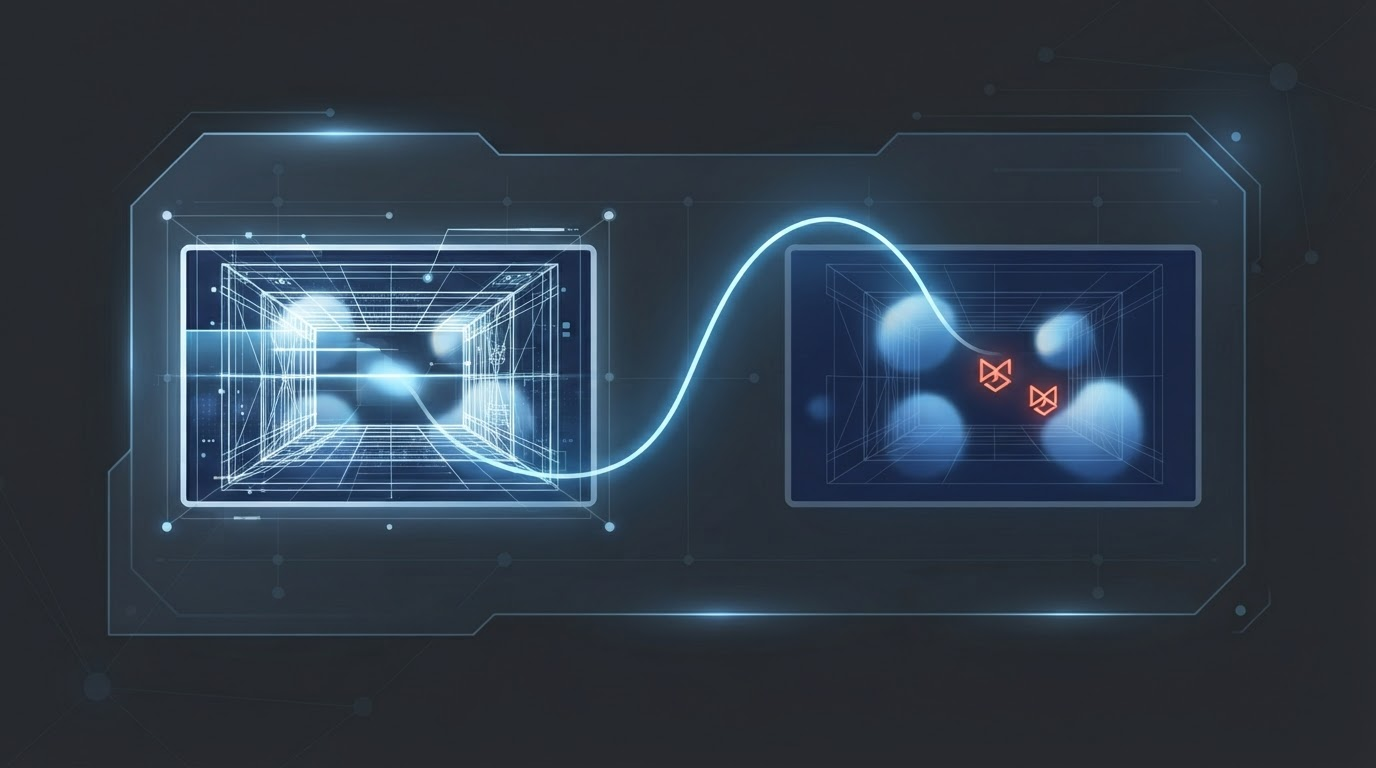
In practice, this is a sequencing problem more than a creativity problem. Analyze the reference video first and get the structural blueprint named explicitly -- hook mechanic, pacing, payoff shape -- so you know exactly what's earning the view. Then, before you touch the script, decide what the identity layer is going to be for *this* video on *your* channel: the opinion you're actually defending, the visual element that will show up again next time, the detail only you would include. Write the recreation so the borrowed structure carries the identity layer, instead of replacing it.
Run several recreations from the same source niche through this same analysis and a pattern shows up fast: the structural notes repeat (most viral openers in a niche cluster around two or three mechanics), while the identity layer is the only thing that's supposed to be different video to video. If your recreations all still look interchangeable with each other after a dozen posts, the identity layer isn't being added consistently -- and that's a fixable production step, not a sign the whole approach doesn't work for you.
## Mistakes That Quietly Cap Follower Growth
- **Reusing the reference video's specific claim or example**, not just its hook shape. Viewers can tell when a "hot take" is actually somebody else's take with the delivery copied.
- **Changing the identity layer every single video.** A different visual style, tone, or persona each time gives viewers nothing consistent to recognize -- variety in structure is fine, but the identity layer needs to repeat.
- **Treating high views as validation that nothing needs to change.** A video can hit the view numbers of the original and still tell you nothing about follower conversion, because those are measuring two different things.
- **Skipping a profile check.** Even a strong identity layer inside the video won't convert if a viewer taps through to a profile with no consistent thread connecting it to what they just watched.
## Frequently Asked Questions
**If the video performed well, doesn't that mean the identity layer worked too?**
Not necessarily. View count and completion rate mostly reflect the structural layer -- the hook and pacing doing their job. Follower conversion is a separate metric that needs to be checked on its own; a video can score well on one and flat on the other.
**Is this the same issue as a recreation just not performing as well as the original?**
Different problem. [Why your AI-recreated viral video isn't performing](/blog/why-ai-recreated-viral-video-not-performing) covers surface-level copying versus structural copying when a recreation underperforms on views. This piece assumes the views are already there and asks why they aren't turning into followers -- a downstream metric, not a views problem.
**Does this mean I should stop recreating other people's videos?**
No -- the structural layer is genuinely reusable, and reverse engineering a working structure is faster than guessing at one from scratch. See [how to reverse engineer viral videos](/blog/how-to-reverse-engineer-viral-videos) for the full breakdown approach. The fix is adding the identity layer on top, not abandoning recreation as a method.
**How is this different from a video's views just crashing after going viral?**
Also a different metric. [Why your views crash after one viral video](/blog/why-do-views-drop-after-a-viral-video) is about a single spike not repeating. This is about views repeating just fine while the follower count stays flat regardless -- the two problems can even show up in the same channel without being related.
## The Bottom Line
Views reward structure. Follows reward identity. A recreated video can nail the first and skip the second completely, and the video will still work exactly as intended -- it just won't grow the channel behind it. Before your next recreation, run the source video through ClipNovia's analysis to get the structural blueprint named explicitly, decide what the identity layer looks like for your channel specifically, and build the script so both layers are actually present in the final video -- not just the one that was already proven to work.
Landing inside the trend's window solves the visibility half of this problem, not the identity half. See [how fast you actually need to recreate a viral video before the trend dies](/blog/how-fast-recreate-viral-video-before-trend-dies) for the timing framework, then come back here for the identity layer that actually earns the follow.