Why Your Views Crash After One Viral Video (And How to Avoid Being a One-Hit Wonder)
# Why Your Views Crash After One Viral Video (And How to Avoid Being a One-Hit Wonder)
You finally broke through — one video hit six or seven figures — and then your next five posts landed back in the low thousands, or worse. This is the most common and most demoralizing moment in a creator's growth curve, and it happens for specific, explainable reasons. Here's why it happens and what to actually do about it.

## The Algorithm Never Promised You a New Baseline
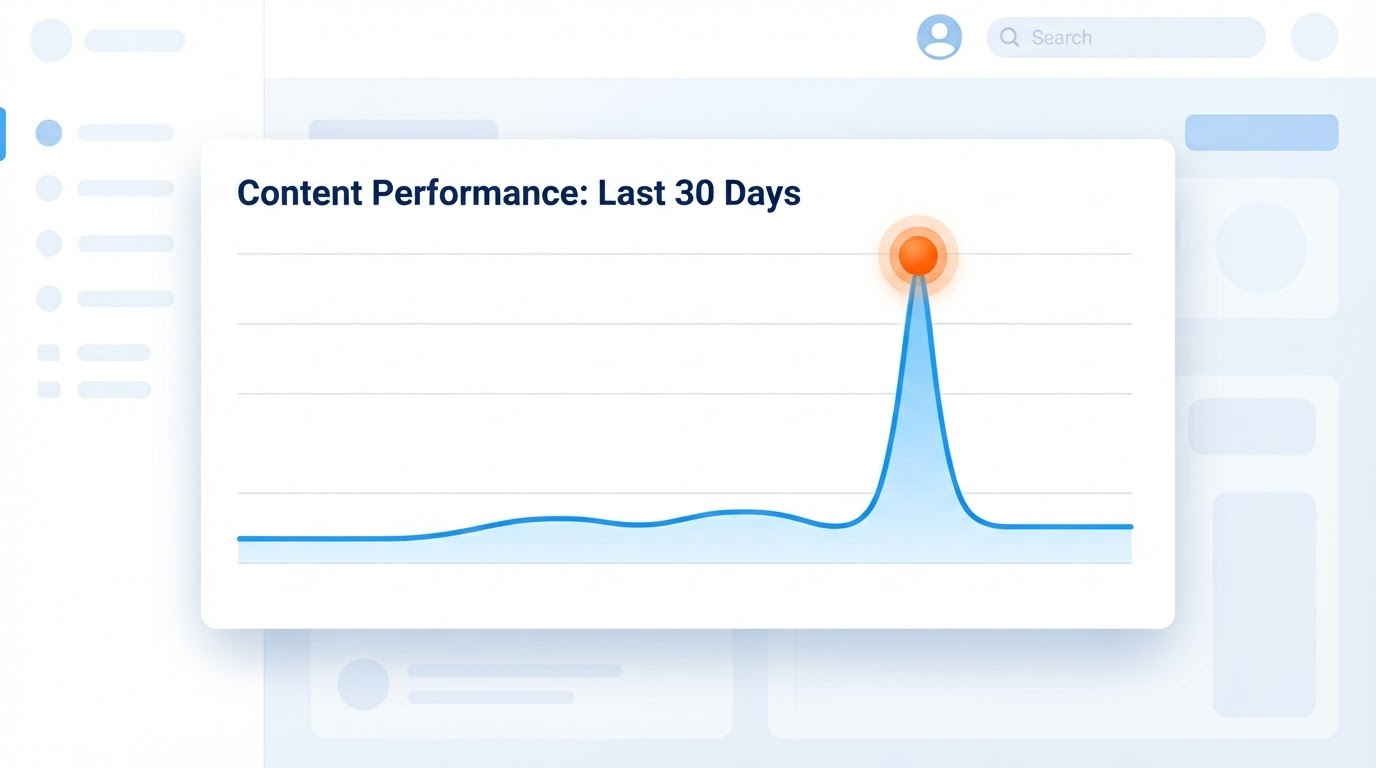
The core misunderstanding behind "why did my TikTok views drop" is treating a viral spike as your new normal instead of what it actually is: an outlier. Every post you publish gets tested against a small sample first — largely your existing followers and a handful of similar-interest viewers — before the system decides whether to push it further. If that test batch engages, distribution widens. If it doesn't, the video quietly stops. A viral hit means one specific piece of content matched a specific audience's intent, sound, or trend timing at a specific moment. It does not mean your account has been permanently reclassified as "high value," and it does not mean your following count now guarantees proportionally larger reach on the next post.
The healthier way to read your analytics is to compare each new post against the median of your last ten or so uploads — not against your all-time best. If your typical video does 8,000 views and your viral outlier did 1 million, a follow-up video landing at 12,000 views isn't a flop. It's actually above your normal baseline. The drop only feels catastrophic because you're anchoring to the outlier.
> A single viral post does not reset your account's baseline — the algorithm re-tests every new video against a fresh, small audience sample regardless of what your last upload did.
## Why the Algorithm "Re-Tests" You Every Single Time
This is the mechanic behind "tiktok algorithm re-test after viral," and it's worth understanding structurally rather than just accepting it. Recommendation systems on TikTok, Reels, and Shorts are built to protect viewer experience above creator consistency. If the platform permanently boosted every account that ever had one viral hit, the feed would quickly fill up with creators coasting on one lucky format. So instead, distribution is decided per-video, based on fresh signals: completion rate, rewatch rate, shares, and how fast engagement builds in the first test window.
Two things have made this feel harsher in 2026 specifically. First, completion rate thresholds for reaching wider distribution have climbed — creators now generally need viewers to watch a much larger share of the video than a couple of years ago, which punishes videos that lean on a viral hook but don't sustain attention. Second, follower engagement now plays a heavier early role: your video is shown to a slice of your own followers first, and if they scroll past without watching or engaging, the algorithm treats that as a strong negative signal before it ever reaches strangers. A viral video often pulls in a wave of new followers who followed for one specific bit — not because they're interested in your account's actual topic — so your follower base can end up diluted with low-intent viewers who don't engage with your next post, which drags the re-test down before it even gets going. This is the mechanical root of the one-hit-wonder tiktok pattern.
## What "Resetting to Baseline" Actually Looks Like
Resetting to baseline isn't punishment, it's the system defaulting back to evaluating you like a normal account. Concretely, that shows up as:
- Initial impressions on new posts dropping back to pre-viral levels (often within 1-3 posts)
- Follower count staying elevated while engagement rate per post falls, because many of the new followers aren't part of your actual niche audience
- Completion rate becoming the dominant lever again — a well-retained low-view video will still outperform a high-view, low-completion video over time
- Comment and share volume normalizing to what your content, not your luck, actually earns
The mistake most creators make here is panicking and chasing the exact format that went viral, over and over, hoping to force the spike to repeat.
## Common Mistakes Creators Make Chasing the Same Formula
| Mistake | Why it backfires | Sustainable alternative |
|---|---|---|
| Reposting near-identical versions of the viral video | Test audience recognizes the repetition; novelty and rewatch value drop fast | Extract the underlying hook mechanic and apply it to a new angle or topic |
| Abandoning your niche to chase whatever trend is hot | New followers from the viral hit rarely convert into a coherent audience if content whiplashes | Stay in your lane; let the viral hit be an entry point, not a pivot |
| Posting less because "nothing will top it" | Consistency signals (posting frequency, retention over time) matter more than any single video | Keep a steady cadence — momentum comes from repeated signal, not a single event |
| Ignoring comments/DMs from the viral wave | Misses the chance to convert curious viewers into a genuine niche audience | Reply, ask questions, funnel engaged commenters toward your core content |
| Treating the drop as proof the account is "dead" | Leads to quitting right when the real audience-building work should start | Benchmark against your rolling median, not your peak |
## Building a Follow-Up Content Plan That Converts One Hit Into a Channel
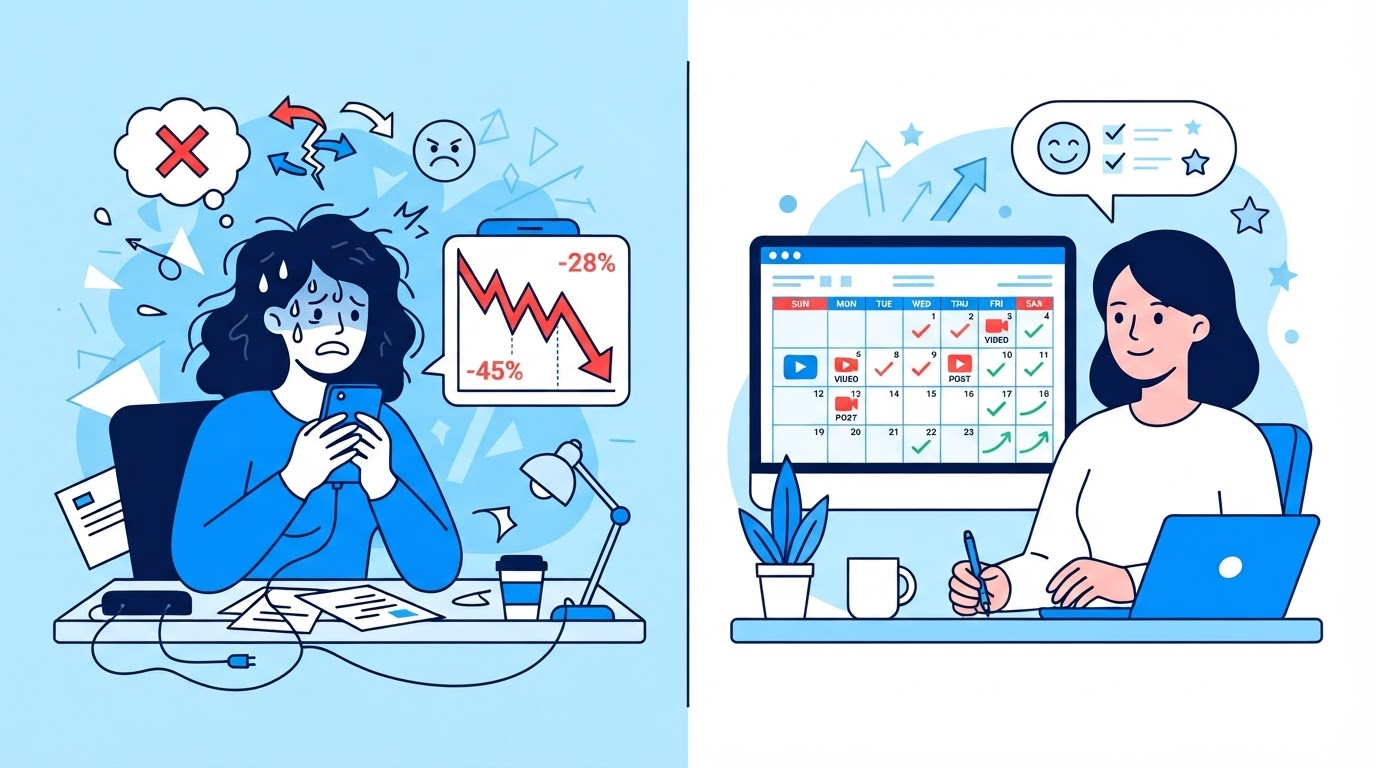
The goal after a viral moment isn't to replicate the exact video — it's to use the attention window (typically the 48-72 hours after the spike, when your profile visits and follows are still elevated) to give new visitors a reason to stick around. A practical follow-up plan looks like this:
1. **Immediately post 2-3 related videos** that riff on the same hook mechanic or topic but aren't clones — this catches profile-visit traffic while it's still warm.
2. **Pin your best "explainer" video** to your profile so new visitors instantly understand what your account is actually about, not just the one clip they saw.
3. **Identify the actual hook mechanic**, not just the topic. Was it a pattern interrupt in the first second, an unresolved question, a visual reveal, a controversial claim? That mechanic is transferable across many topics — the specific topic usually isn't.
4. **Run the next 5-10 posts as controlled tests**, changing one variable at a time (hook line, pacing, length, CTA) so you can see what's actually driving retention versus what was luck.
5. **Track completion rate and rewatch rate per post**, not just raw views, since those are the signals actually deciding distribution now.
## Using ClipNovia to Turn a Single Viral Hit Into a Repeatable Engine
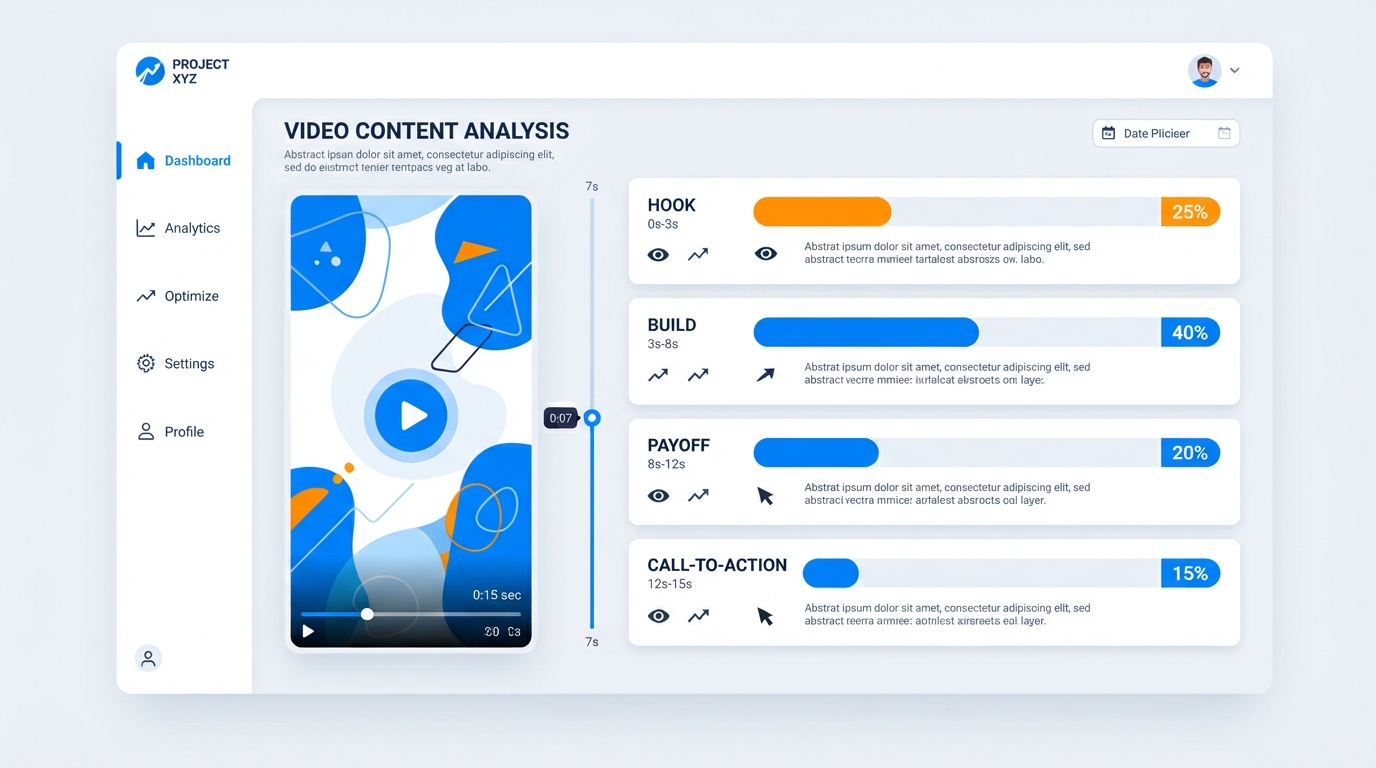
This is exactly the gap ClipNovia is built to close. Instead of guessing why the follow-up videos underperformed, you can run your viral video and its follow-ups through ClipNovia's analysis to see the actual hook structure, pacing, and retention pattern that made the original work — separated from the topic itself. From there, the workflow becomes systematic instead of hopeful:
- Break down the viral clip into its structural components (hook type, pacing, CTA placement) rather than treating it as a black box
- Generate new scripts that reuse the proven structure with fresh topics, so you're testing the format, not gambling on a repeat
- Batch out several structured variations at once so you have a real content plan for the attention window instead of one rushed follow-up
- Compare performance of the new batch against the original to see which structural elements actually mattered
Used this way, one viral hit stops being a one-off event and becomes a template you can keep testing and refining — which is the actual difference between an account that flops after going viral and one that builds sustained growth from it.
## Setting Realistic Expectations for the Next 30 Days
Sustained growth after a viral spike rarely looks like a smooth climb — it looks like a noisy, gradually rising baseline with your original spike still standing alone above it. Expect:
- A sharp drop immediately after the viral post (normal, not a penalty)
- Slow, uneven baseline growth over the following weeks as the algorithm re-evaluates your account post-by-post
- Occasional smaller secondary spikes as you refine the hook formula, each one a little more predictable than the last
- Your true audience size to reveal itself only after the diluted, low-intent followers from the viral wave stop skewing your averages
> The drop after a viral video isn't a sign of a broken account — it's the algorithm re-testing every single post against a fresh audience sample, exactly as it does for every creator, viral history or not.
Treat the viral video as proof of concept, not a plateau you fell from. The creators who avoid the one-hit-wonder label aren't the ones who get lucky twice — they're the ones who turn the first hit into a repeatable, testable system.
**Related:** A steady stream of views that never turns into new followers is a different pattern worth checking too -- see [why AI-recreated viral videos get views but not followers](/blog/why-ai-recreated-viral-videos-views-not-followers) for the structure-versus-identity gap that causes it.